Osoyo
Being a treatise on the entity known as the Blackfrost Whale, Its origins in the Dark Tapestry, Its imprisonment at the Crown of the World, Its corruptions of Dream and Flesh, and its relations with those other powers that circle the City of Nod like vultures over a feast they cannot quite reach, compiled from Elven exile records, Aboleth contact fragments, the Ossuary of Living Tides, recovered journals of Dr. Etward Ritalsin, Fey testimony of questionable reliability, and the author’s own increasingly troubled dreams
I. Nature
Osoyo is not a god. I state this plainly because the distinction matters and because certain colleagues at the University have been alarmingly casual about blurring the line. Gods, even the most terrible of them, exist in relationship to their worshippers. They grant power. They make covenants. They can, at least theoretically, be bargained with. Osoyo does none of these things. It does not want worship. It does not answer prayers. It inflicts itself upon those who serve it, and the servitude is not negotiated but compelled. This is the difference between a god and a natural disaster with intent.
What Osoyo is, properly speaking, is an agent of Entropy, the third primordial cosmic force, alongside Chaos and Order. I have written elsewhere about these three forces, and I will not repeat the full taxonomy here, except to note that even Geist der Feen, a being who speaks of cosmic catastrophes with the breezy confidence of an aristocrat discussing the weather, grows visibly and genuinely frightened when Entropy’s agents are named. Unlike Chaos, which seeks to reshape reality, or Order, which seeks to impose structure upon it, Entropy seeks only the end of all existence. The slow decay. The dissolution of everything that is. Osoyo is this principle given form, a consciousness from the Dark Tapestry, the deepest void of outer space, that predates the gods and perhaps the very star that warms Golarion.
Its hunger is not random. It feeds on dreams and nightmares alike, consuming the consciousness of dreamers one by one, and wherever it has passed, the dreamscape is left barren, stripped not merely of pleasant dreams but of all awareness. Hope and fear alike are devoured. What remains is void. I find this the most philosophically disturbing aspect of the entity: it does not distinguish between the beautiful and the terrible. It simply consumes.
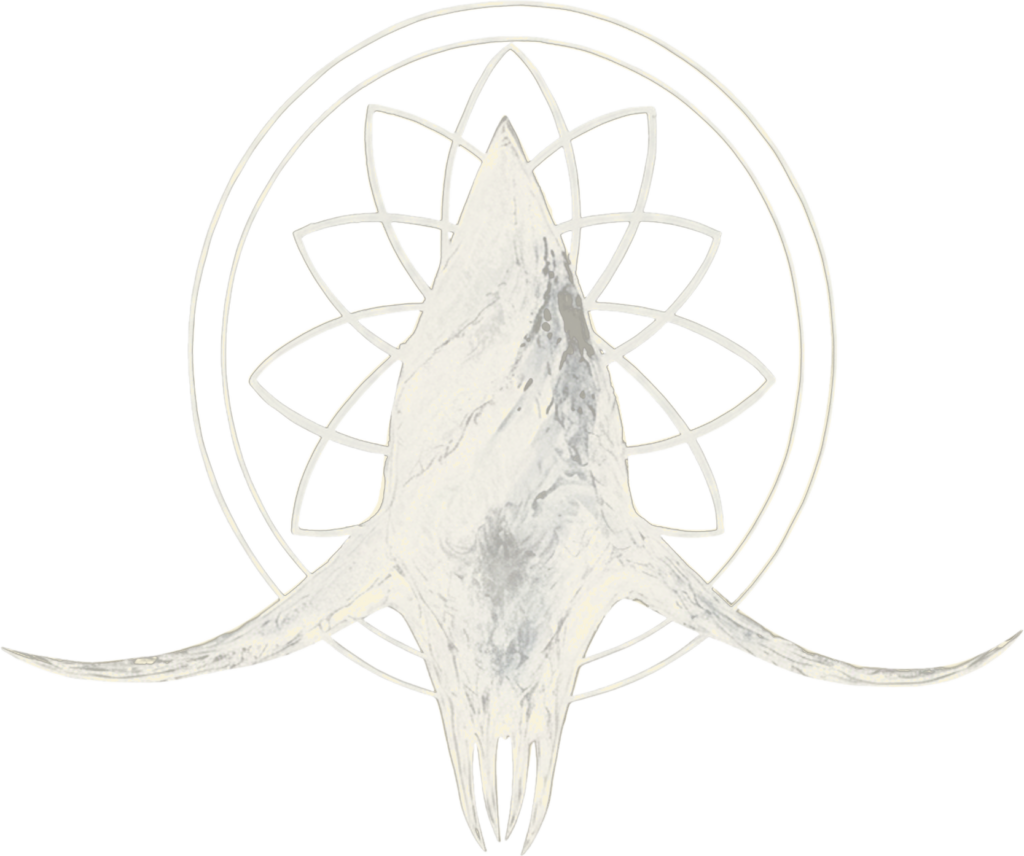
As for its physical form, to the extent that such a concept can be applied without irony to a being that exists partly outside what we can actually perceive, survivors struggle to describe it coherently. The body is vast and serpentine and whale like, dark as deep water, its hide is studded with clusters of eyes that glow with a cold, sickly luminescence, yellow-green and utterly devoid of recognition. Except for the main eye that is in what might generously be called its head. Great tentacles unfurl like the arms of some abyssal cephalopod from the trunk of its body, ringed with suckers and tapering into whip-thin tendrils that trail behind it like the tattered edges of a nightmare. The whole form seems to exist at the threshold of visibility, its lower mass dissolving into streams of of a black frost like substance, and ghostly vapors, iridescent blues and greens that suggest bioluminescence perverted into something deeply wrong. It moves through the air as a thing that has simply decided gravity does not apply to it. There is no mouth visible in most accounts, and I think this is perhaps the most unsettling detail: something that consumes so voraciously should have a mouth. That it apparently does not suggests that consumption, for Osoyo, is not a physical act.
This is all hearsay and from others written accounts. I have not seen it myself. I am in no hurry to change this.
© 2018 – 2026 Darren F. Gideon and Contributing Players. All rights reserved. | Legal & Licenses